When you have a wood fence common problems can exist no matter where you live, but here in Central Texas there are a lot of problems that can occur for a variety of reasons. Rotting gate and fence posts are one of the biggest problems our fence company comes across.

The truth is a lot of things can cause wood rot that eventually leads to other problems like a leaning fence. If you want to correct the issue or prevent it from happening to an existing fence, here’s what you need to know.

What Causes Wooden Fence Posts to Rot

Wondering what is causing your wood fence posts to rot away? There could be one or more very common issues at play from soil conditions to the different materials there are used.

The Wrong Types of Posts Were Used – The first thing to check is the fence material. When a new fence is installed the fencer should use pressure-treated lumber that will resist moisture. And if the pressure-treated posts are cut prior to installation, they need to be resealed or the untreated wood will be exposed.

Improper fence installation – Many issues can arise when a fencer doesn’t install a fence correctly. In addition to using the wrong materials for the posts, not putting concrete or gravel around the footings or doing so improperly can increase the chance of wood rot. If concrete is used there can’t be any gaps that allow water to get in or it could make wood rot worse. Water that gets trapped is a breeding ground for bacteria and fungi that eat away at the wood. Not setting posts deeply enough is another problem that can occur during installation.

Poor Water Drainage Around Posts – If there’s constant moisture where the fence post meets the ground it’s all but certain that wood rot will form. When moisture is present that means the wood won’t dry out. The high moisture levels are usually the result of poor drainage that needs to be addressed.

Clay-Rich Soil and Lots of Rain – Even if the drainage at a property is good, soil and weather conditions can cause wood rot to form. In areas with clay-rich soil that holds moisture and a lot of rain, the moisture level of the ground is going to be higher and rot is more likely.

Acidic Soil – Another environmental factor is acidic soil. It deteriorates the wood and makes it easier for fungi and bacteria to do damage.

Excessive Shade or UV Exposure – Portions of a fence that are always in the shade are more likely to develop rot simply because the wood isn’t drying out as quickly. The opposite is true for fencing that is constantly in the sunlight. The wood can get too dried out, crack and allow water to penetrate through.

Destructive Insects – Termites, carpenter ants and other insects that bore into wood can cause holes that let water into the wood. When water seeps into the entry points they made rot can form.

Inadequate Maintenance – Fencing needs to be maintained to maximize its longevity. One key maintenance measure to avoid wood rot is clearing plants, grass and vegetation away from the fence. When plants are up against the fence there’s less airflow to dry out the wood.

Repairing Fence Posts With Wood Rot

Have you noticed mildew growth? Is the fence leaning more than before? Don’t make the mistake of overlooking these issues that indicate wood rot is the root of the problem. If you need to fix fence posts that are suffering from wood rot, there are two options: full replacement of the posts or reinforcement.

Fully Replacing Rotten Fence Posts

When the rot is extensive the best option is to completely replace the affected fence posts. To do this you need to first remove the rails and panels around the rotted posts. You can then dig around the post to remove the concrete or gravel as well as the post.

Once everything is removed, a new rot-resistant post can be installed with gravel and concrete surrounding it. Give the concrete about 24 hours to cure before replacing the rails and panels.

Reinforcing Rotting Fence Posts With Repair Spurs

Moderate rotting can be addressed with concrete or metal repair spurs. Instead of completely removing the post, you’ll cut away the rotten part. Next, a concrete or metal repair spur is placed into the ground beside the post so that half of the repair spur is in the soil and the other half is in the footing. The post can then be attached with bolts or screws. Finally, fill the hole back in so that the soil is compact.

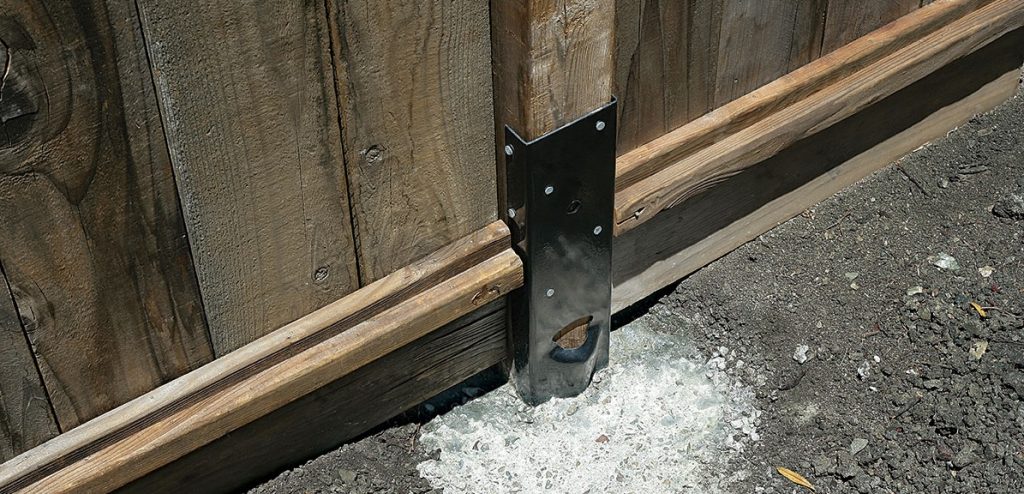
Reinforcing Rotting Fence Posts With Brackets

If you caught the problem early and there’s only minor rotting above ground, you can reinforce the posts using brackets. Clear around the post then put the repair bracket in between the concrete and the post. Use structural screws to fasten the bracket to the post, and you’re done.

Fence post

Repair Method Comparison

MethodDurabilitySkill/Tools NeededBest For
Full ReplacementHighModerate to highSeverely rotted posts
Concrete/Metal Repair SpurModerate to highModerateRot at base, solid upper post
Bracket ReinforcementModerate (Temp.)Low, DIY hand toolsMinor rot, above grade only


How to Prevent Fence Posts From Rotting in the Future

Installing or replacing your fence? Follow these tips to prevent rot from affecting your fence and causing further damage.

Get Expert Assistance – Improving your fence line is an investment – as long as your fence is constructed in the right way. Using a licensed contractor that follows local regulations, knows how to assess the conditions and uses proper installation techniques might cost more upfront, but you’ll get more out of your fence in the long run.

Only Use Properly Treated Lumber For Posts – Pressure-treated lumber is an absolute must, but you still have to be careful with the material selection. You want to use posts that have been treated deeply and evenly.

Ensure Posts Aren’t in Direct Contact With Soil – Fence posts should never be in direct contact with the soil. Posts should be secure in the ground with concrete or gravel surrounding the footings.

Improve Drainage Around the Fence Line – You can’t choose where your property lines are, but you can improve the drainage so that there’s less moisture. Pay close attention to the slope of the yard to determine how water drains and if it can be diverted away from the fence. Since the fence is shared, you may need to reach out to neighbors to make sure things on their side don’t contribute to the problem.

Water the Yard Wisely – If you have an irrigation system, pay close attention to where and how much water is being sprayed. Over-watering will increase your water bill and can cause drainage issues around the fence line.

Practice Proper Maintenance – A wood fence requires regular maintenance to prevent issues like rot. In addition to clearing away vegetation, wood fencing materials should be stained every few years to provide an added layer that protects it from moisture and discoloration.

The beauty and classic appearance of a wooden fence appeals to a lot of homeowners in Central Texas. But no one likes the idea of wood rot, and it’s a fence project that can be difficult to handle on your own. The team at Purple Fencing Company will help you extend the life of a wood fence with expert installation, effective repairs and maintenance that will protect wood and prevent rotting.

Reach out today to let us know about the issue you’re facing and we’ll come up with reliable solutions that support the structure of your fence. 

SIGN UP FOR OUR NEWSLETTER

Get notified when we have seasonal discounts, special offers and savings!