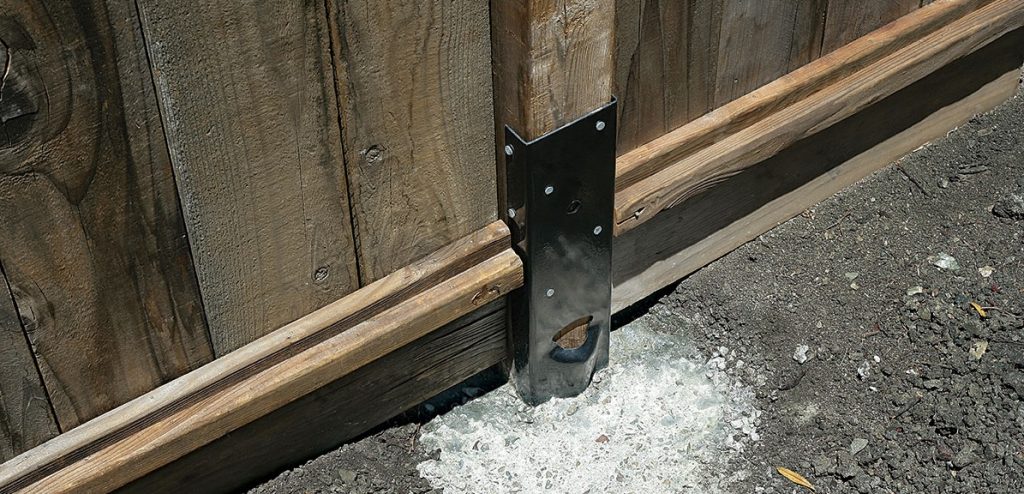
What Causes Wooden Fence Posts to Rot
Wondering what is causing your wood fence posts to rot away? There could be one or more very common issues at play from soil conditions to the different materials there are used.
The Wrong Types of Posts Were Used – The first thing to check is the fence material. When a new fence is installed the fencer should use pressure-treated lumber that will resist moisture. And if the pressure-treated posts are cut prior to installation, they need to be resealed or the untreated wood will be exposed.
Improper fence installation – Many issues can arise when a fencer doesn’t install a fence correctly. In addition to using the wrong materials for the posts, not putting concrete or gravel around the footings or doing so improperly can increase the chance of wood rot. If concrete is used there can’t be any gaps that allow water to get in or it could make wood rot worse. Water that gets trapped is a breeding ground for bacteria and fungi that eat away at the wood. Not setting posts deeply enough is another problem that can occur during installation.
Poor Water Drainage Around Posts – If there’s constant moisture where the fence post meets the ground it’s all but certain that wood rot will form. When moisture is present that means the wood won’t dry out. The high moisture levels are usually the result of poor drainage that needs to be addressed.
Clay-Rich Soil and Lots of Rain – Even if the drainage at a property is good, soil and weather conditions can cause wood rot to form. In areas with clay-rich soil that holds moisture and a lot of rain, the moisture level of the ground is going to be higher and rot is more likely.
Acidic Soil – Another environmental factor is acidic soil. It deteriorates the wood and makes it easier for fungi and bacteria to do damage.
Excessive Shade or UV Exposure – Portions of a fence that are always in the shade are more likely to develop rot simply because the wood isn’t drying out as quickly. The opposite is true for fencing that is constantly in the sunlight. The wood can get too dried out, crack and allow water to penetrate through.
Destructive Insects – Termites, carpenter ants and other insects that bore into wood can cause holes that let water into the wood. When water seeps into the entry points they made rot can form.
Inadequate Maintenance – Fencing needs to be maintained to maximize its longevity. One key maintenance measure to avoid wood rot is clearing plants, grass and vegetation away from the fence. When plants are up against the fence there’s less airflow to dry out the wood.